Congratulations on Your Podcast! It Costs $4,000 a Month and Nobody Is Listening
There is a moment in every American comedian's life when they look at a half-empty Tuesday showcase in a strip mall comedy club and think, you know what this needs? More overhead.
Thus begins the podcast era. It is a rite of passage on par with buying a leather jacket you'll sweat through or developing a strong opinion about Austin. And like everything else in comedy, the pipeline is completely predictable — so predictable, in fact, that we've mapped it here so you can identify which stage your favorite funny person is currently dying in.
Stage One: The Equipment Purchase
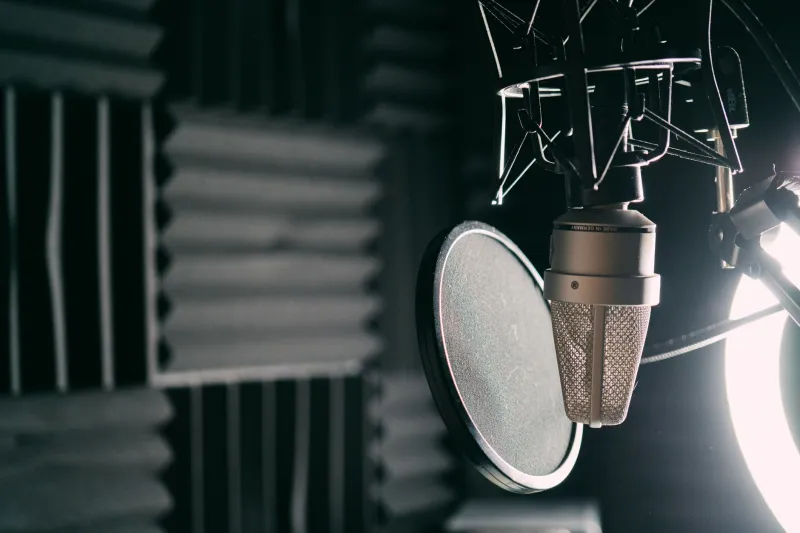
It starts innocently. A $349 microphone. Then acoustic foam panels that make the spare bedroom look like a serial killer's recording studio, which is honestly appropriate, because that's exactly what's about to happen in there. A mixer. A camera "for the YouTube clips." A subscription to a podcast hosting platform. A logo designed by a guy on Fiverr who has never met a comedian and never will.
Total damage: somewhere north of $4,000 before a single episode exists. The comedian will describe this as "investing in myself," which is the same language day traders and Amway recruits use, and the outcomes are similar.
The Archetypes
Once the show launches, every host settles into one of a few well-documented species. Learn to spot them:
The Guy Who Reads One Headline. He has prepared for this episode by reading a single news article, possibly the headline only, possibly a headline from 2019. He will spend ninety minutes riffing on it while his co-host — there is always a co-host, usually a friend who owed him money — says "right, right" in increasingly desperate tones.
The Formerly Famous Interviewer. You've seen his show. You're not sure where. He asks every guest what it was like working with that guy, and when the guest says they never worked with that guy, he says "well, you would have loved him." His interview technique is asking himself questions and waiting for someone else to answer.
The Two Dudes on Couches. No agenda, no prep, no listener retention. Their show is called something like Raw Dog Podcast or Two Guys Talking, and every episode opens with eleven minutes of audio troubleshooting followed by "so anyway, what's up with airports?"
The Contrarian Monologist. This one has graduated to fullfallen-media-empire status. He does two hours weekly, solo, unfiltered, no notes. The first forty minutes are a cold open about how you can't say anything anymore — delivered into a $349 microphone, uploaded instantly to a global distribution network that pays him nothing because nobody subscribes.
The Slowest Possible Cancellation
Here's the beautiful, awful math of it all. On a club stage, a comedian bombs in front of twelve people and it evaporates by morning. On a podcast, every bad take is archived, timestamped, transcribed by a fan account, and clipped into a 45-second TikTok with captions and a sad violin. The podcast didn't make them more free. It just made their failures permanent, searchable, and monetizable — by someone else.
Two hours of unfiltered weekly monologuing is not freedom. It is a subscription service for your own cancellation, billed monthly, with excellent audio quality. The open mic at least had the decency to be cheap.
And that's the question nobody in the boom wants to ask: did the podcast kill comedy's last safe space for failing in front of twelve people? Because failing in front of twelve people was the whole apprenticeship. You learned timing, you learned what lands, you learned humility at $5 a ticket. Now the apprenticeship happens in a soundproofed room with zero feedback, in front of an algorithm that only surfaces your worst moment, and the tuition is $4,000 up front.
The Empire Phase
Eventually — and it always happens — the show "hits its stride," meaning an episode gets 40,000 views because a guest said something insane. Sponsorships arrive: a mattress company, a meat delivery service, a VPN that the host clearly does not use. The merch store opens. There's a Patreon with tiers named after inside jokes nobody understands.
And then, exactly on schedule, the empire falls. Not with a bang but with a clip. A two-minute excerpt, stripped of context, posted by an account with 14 followers that somehow reaches three million people by Thursday. The sponsors evaporate. The apology is written in the Notes app (we've covered this genre before; it's a whole literary tradition at this point). The podcast continues, technically, but now every episode is recorded in the tone of a man doing community service.
In Defense of the Twelve People
Look, we're not anti-podcast here at Plus Outrage. Some of our best outrage comes from podcasts. But we'd like to formally nominate the dingy open mic — the one with the broken mic stand, the bartender doing inventory loudly, the guy in the back who laughs at everything including the sound of his own drink — as America's most underrated comedy institution.
It's the only venue where you can fail safely, cheaply, and permanently unarchived. No clips. No timestamps. No empire to fall from.
The rest of it? That's just a $4,000 microphone pointed at a slow-motion car crash with surprisingly good production values.
The Plus Outrage staff records a podcast, obviously. It's on every platform. Please don't clip it.