We Put a Lab Coat on Outrage: The Definitive Rankings of Comedy's Most 'Unforgivable' Specials
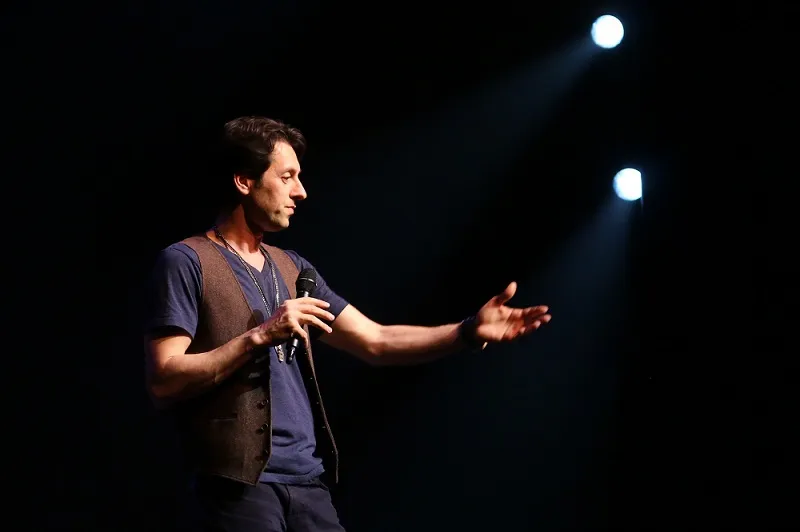
Photo: PersianDutchNetwork, CC BY-SA 4.0, via Wikimedia Commons
Here at Plus Outrage, we have a simple editorial philosophy: if everyone claims to be furious, someone should probably check the thermometer. So this week, we did exactly that. We compiled the most controversial stand-up specials of the last ten years, cross-referenced them with Twitter trends, cable news chyrons, and the number of think pieces published per hour, and assigned each one a score on our proprietary Outrage Index™ (patent pending, legally distinct from any actual science).
The scale runs 1 to 10. A 1 means three people tweeted about it and one of them was the comedian's mom. A 10 means your aunt forwarded you a Facebook post about it with the caption "SO SAD WHAT HAPPENED TO COMEDY."
The Methodology (Such As It Is)
Our researchers — a guy named Derek and a bottle of gas station wine — evaluated each special on four metrics:
- Trend Duration: How long did it dominate the discourse? Two hours is a sneeze. Two weeks means somebody's booking agent is earning their percentage.
- The CNN Test: Did a panel of five people discuss it on cable news at 9 PM on a Tuesday? If yes, add points.
- The Think Piece Economy: How many essays were titled some variation of "What [Special] Reveals About America"? Spoiler: nothing. It reveals nothing about America. America is fine.
- The Re-Watch Rate: The dirty secret of outrage — did the special's viewership go up after the controversy? Because it always goes up. Always.
Now, the rankings.
The Honorable Middle: Everyone Who Got a 5 or 6
The bulk of the decade's "controversial" specials land squarely in the middle, and that's the most damning data point of all. These are the specials where a comedian said something edgy, three thousand quote-tweets declared it the end of civilization, and by Friday everyone had moved on to being mad at a airline.
A 6 on the Outrage Index is the sweet spot of modern show business. It's enough heat to sell tickets, not enough to lose a Netflix deal. Honestly, if we were cynical — and we are, it's the whole brand — we'd say some of these controversies were engineered with the precision of a NASA launch. Comedians have learned that a scandal is just a trailer you don't have to pay for.
The Chappelle Paradox
We can't write this listicle without addressing the elephant in the comedy special. Dave Chappelle has become less a comedian than a genre — a category of discourse unto himself. His specials generate outrage the way hurricanes generate wind, and increasingly, the outrage is about the outrage.
But here's the funny part (the actual funny part, not the parts in the specials): half the people furious at Chappelle haven't watched him since the Chappelle's Show era, and half the people defending him are doing so purely as a tribal loyalty oath. Nobody's laughing. Everybody's saluting. That's not comedy anymore — that's a flag.
The impressionists complicate things further. There is now a whole ecosystem of comics doing Chappelle impressions, and audiences getting mad at the impressions, which is like getting mad at a photocopy of a photocopy. The Outrage Index scores these a respectable 4, mostly out of respect for the craft of being mad at a Xerox.
The Genuine 9s
A few specials actually broke the scale, and it's worth asking why. The common thread? The outrage outlived the news cycle. It wasn't a two-day trend; it became an identity marker. People organized around their feelings about a comedy special the way previous generations organized around, say, wars.
And yet — and we cannot stress this enough — every single one of those 9-out-of-10 specials saw a massive viewership spike. The anger was real, and it was also the best marketing money can't buy. Outrage, it turns out, is just advertising that pays you.
So Is Any of It Still Landing?
Here's our honest editorial takeaway, delivered in the neutral tone our lawyers insist upon: we are all performing anger now. The outrage is real in the sense that a WWE body slam is real — there are genuine humans, genuine impact, genuine bruises — but it's also choreographed, scheduled, and monetized within an inch of its life.
The comedians know it. The platforms know it. The think piece writers definitely know it, since they've built entire careers on "What This Special Means for the State of Discourse." (It means nothing. Discourse is fine. Go outside.)
Does provocation still land? Sometimes, when it's actually funny. When it's not funny, no amount of controversy can save it — outrage is a multiplier, not a substitute for jokes. That's the one rule this decade has confirmed: you can be mad at a comedy special, or you can laugh at it, but you cannot do both, and the ones that make you do both are the only ones anyone will remember in ten years.
The rest is just content. And hey — so is this article. Outrage Index score for our own piece: a solid 3. We're working on it.
The Outrage Index™ is not peer-reviewed. Derek is not available for comment.